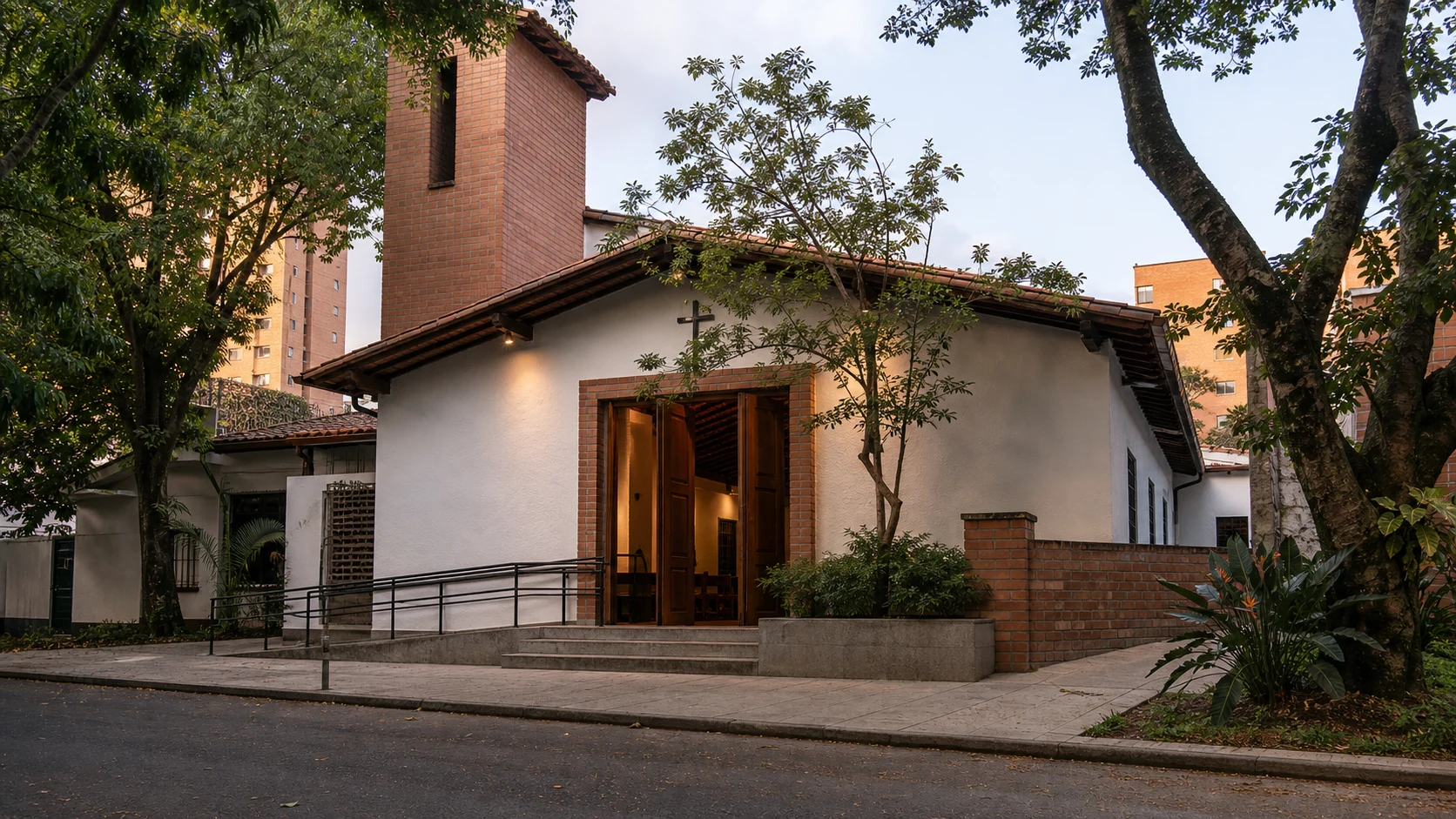
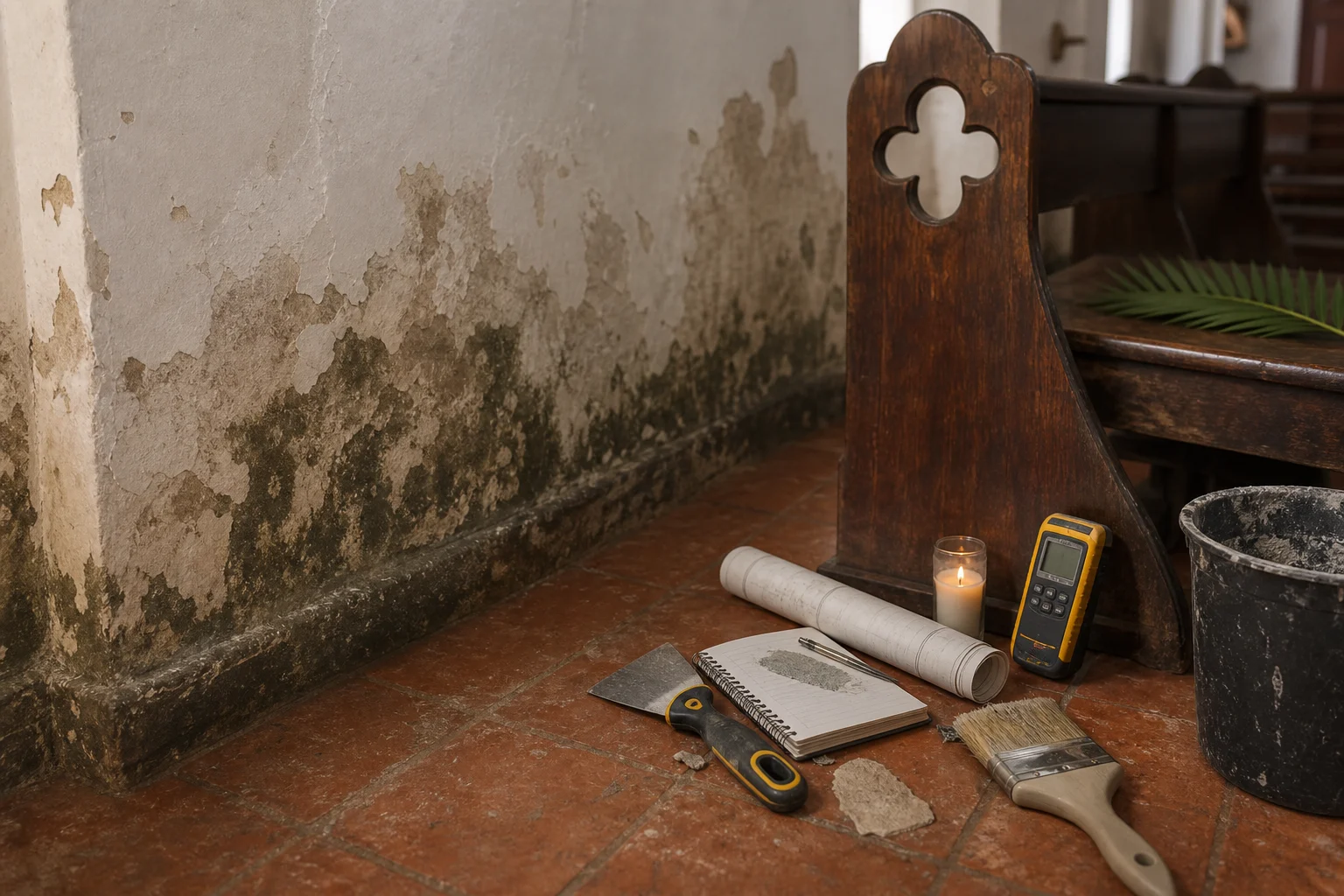
Roof and moisture
Leaks, gutters, walls, paint, ceilings, and visible deterioration.

TOTTEM COLOMBIA · CHURCHES
We diagnose, design, and guide interventions for churches, chapels, parish houses, and community halls that need to care for their structure, daily use, and the dignity of the place.
CRITERIA
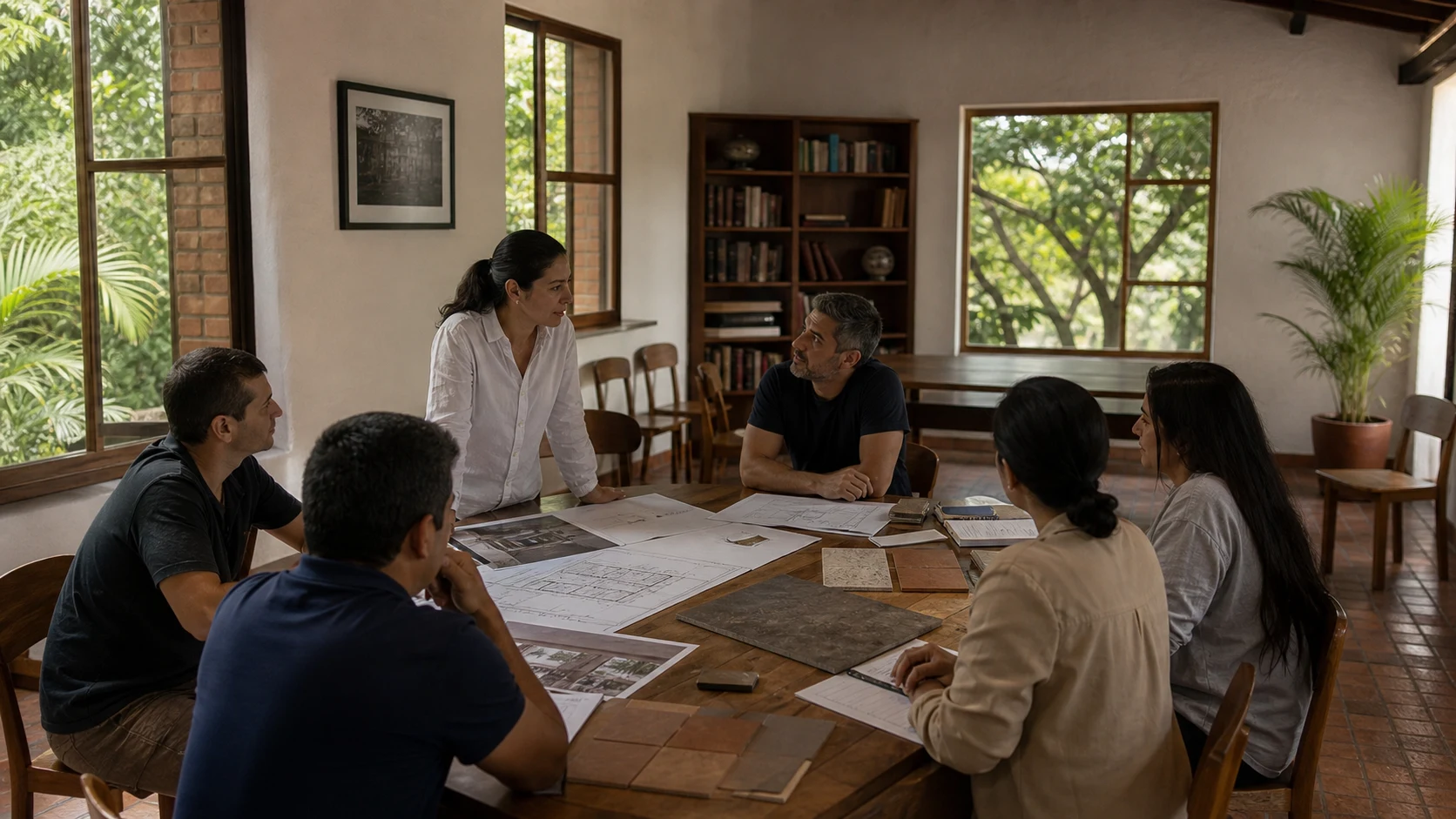
A church does not function like any other building. Mass, catechesis, community gatherings, maintenance, budget, neighborhood memory, and the symbols the community recognizes all coexist there.
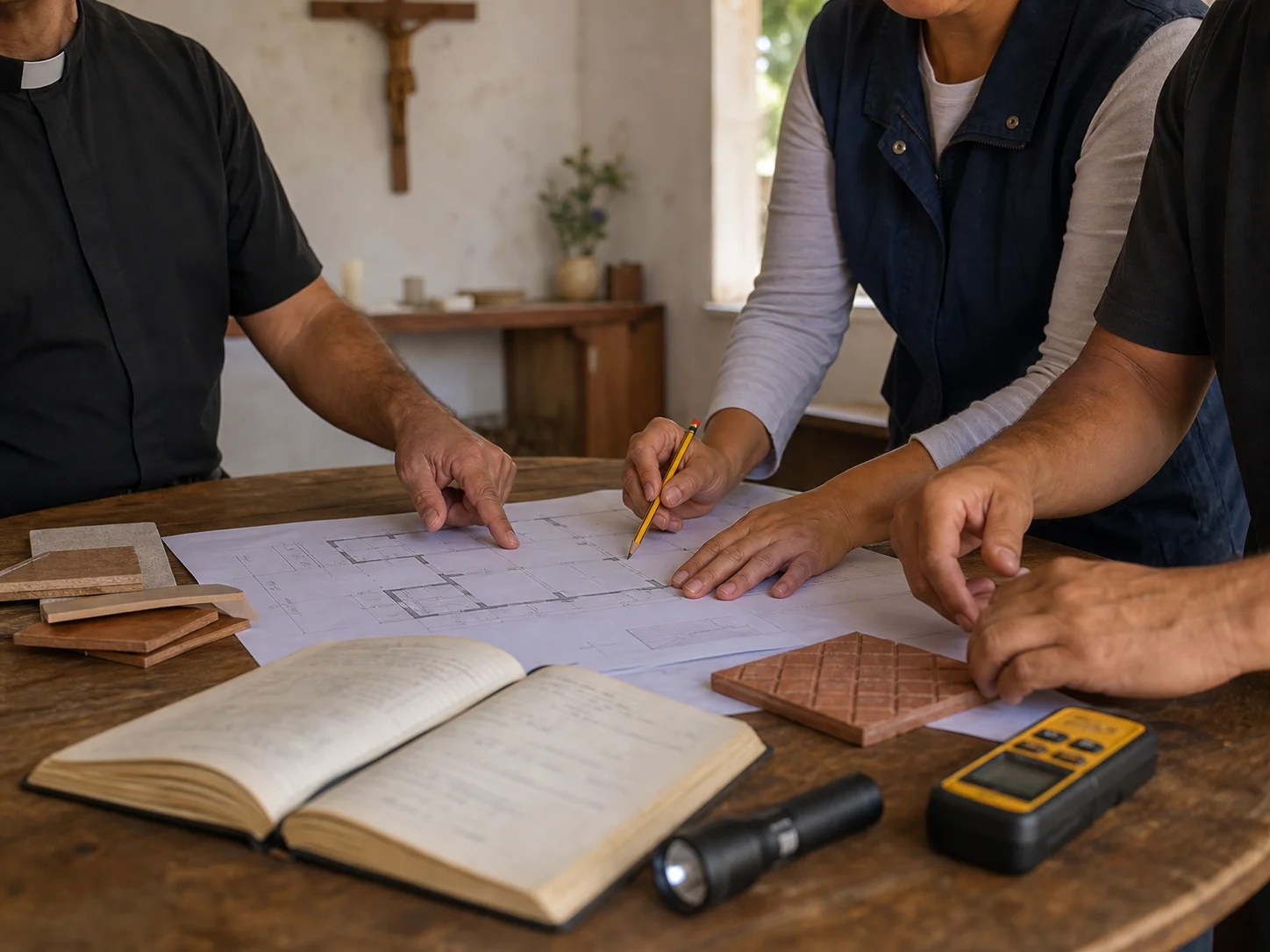
READING THE PLACE
A leak affects the paint. Poor light changes the atmosphere. A deteriorated hall limits community life. That is why intervention is thought of as a system, not as an isolated repair.
ASSESSMENT
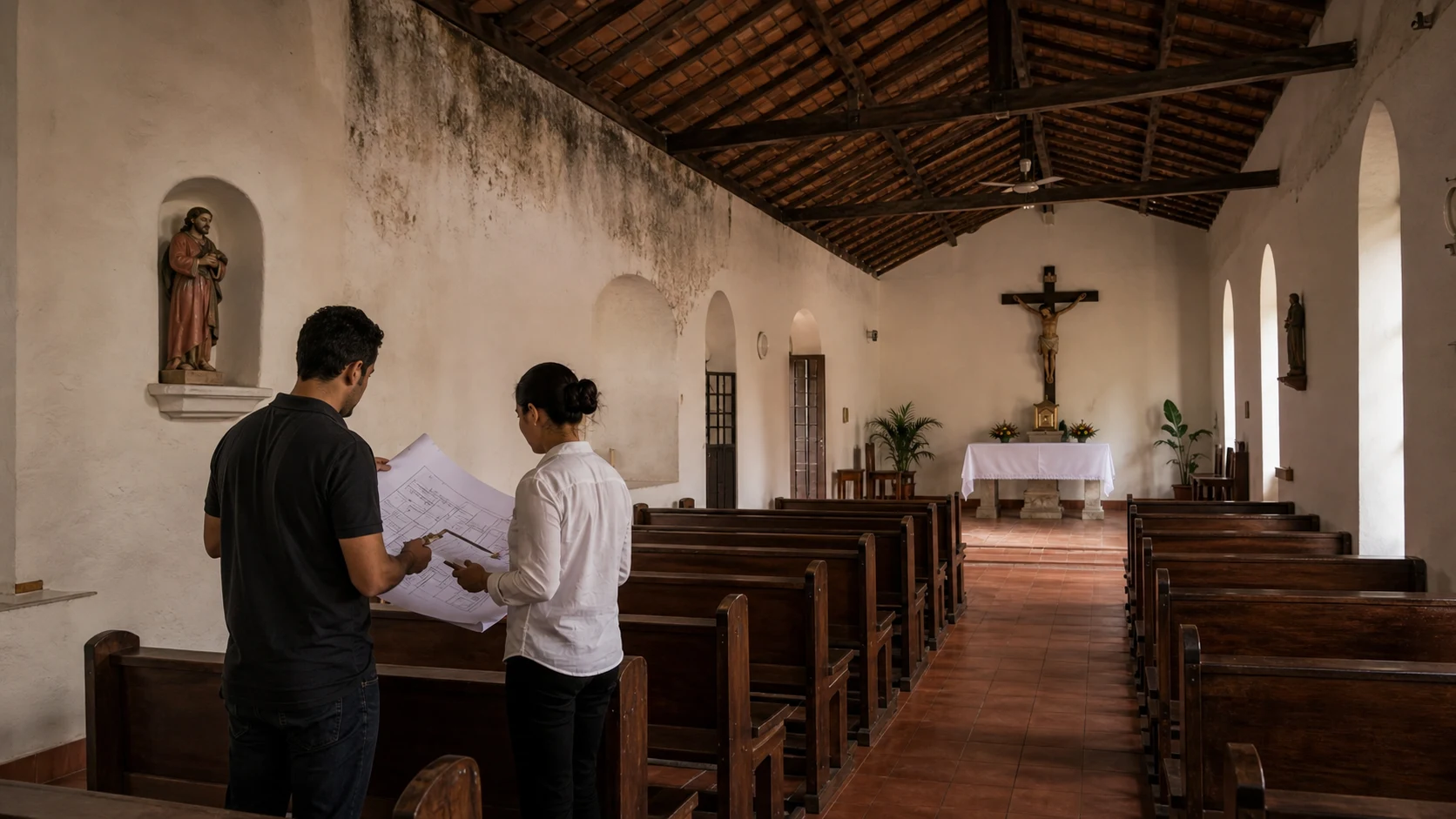
Before proposing an intervention, we organize what affects the building, daily use, budget, and the dignity of the place.
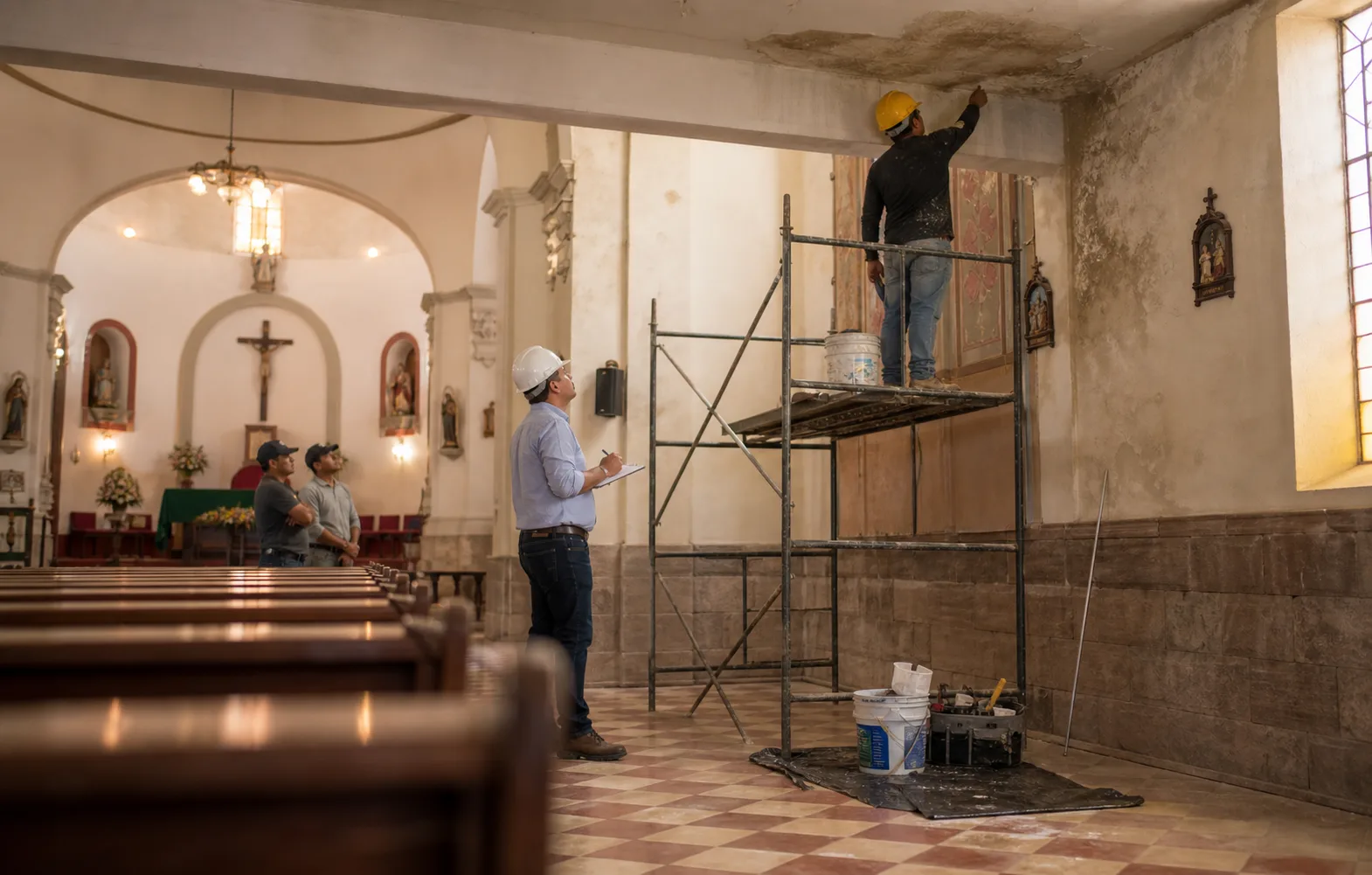
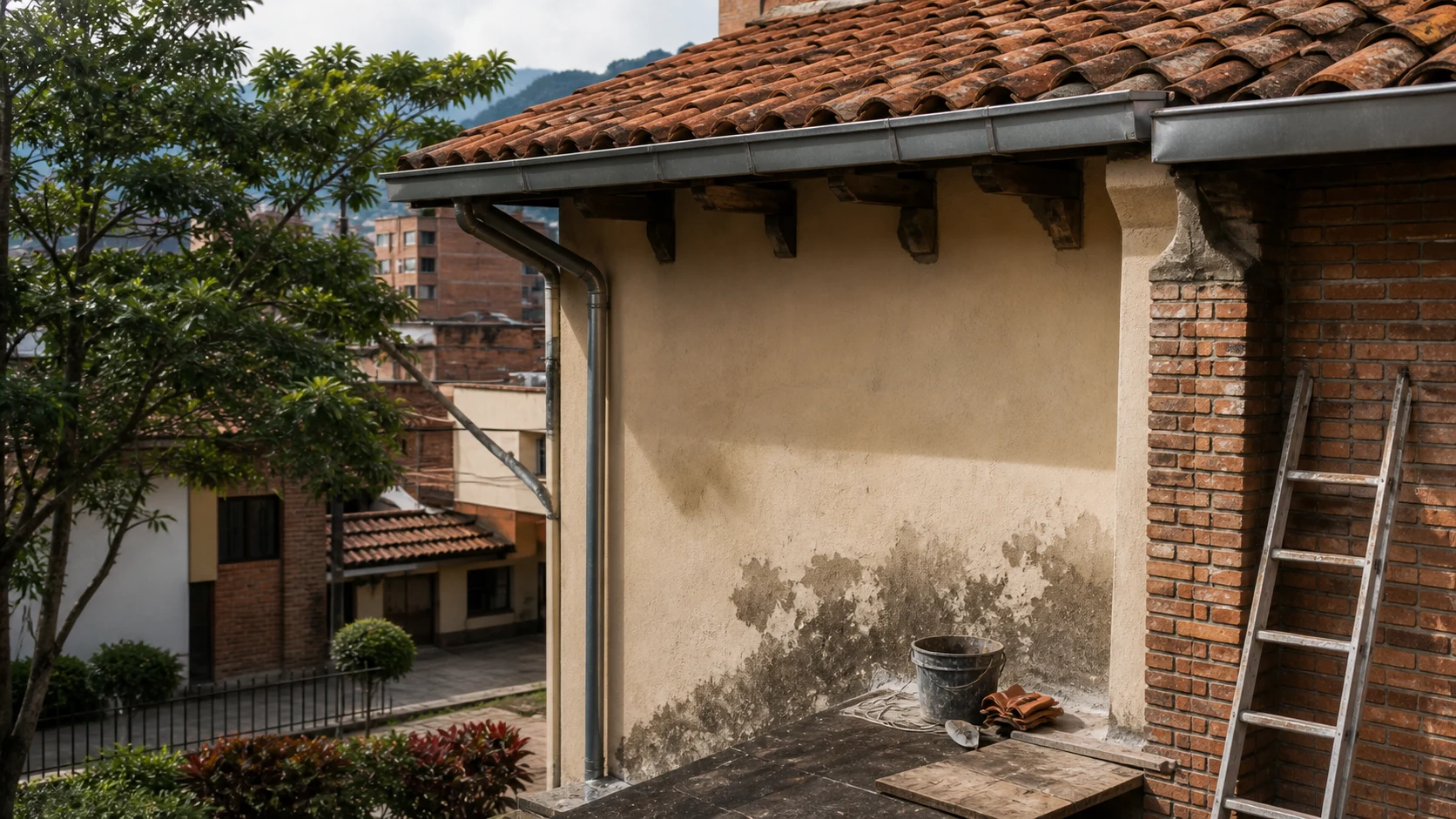
Leaks, gutters, walls, paint, ceilings, and visible deterioration.
Location, proportion, paths, images, memory, and hierarchy of the place.
Natural light, ventilation, acoustics, visibility, and comfort.
Formation, meetings, care, catechesis, and gathering spaces.
Separate what is urgent, convenient, and viable with available resources.
Intervene without blocking liturgical and community life.
SCOPES
First we understand the problem. Then we define whether the path is assessment, maintenance, design, drawings, or phased construction.
Visit, survey, physical condition, risks, and intervention priorities.
Targeted corrections to stop deterioration and recover use.
Adjustments to altar, lighting, paths, furniture, and atmosphere.
Documentation, budget, purchasing, and execution support.
PROCESS
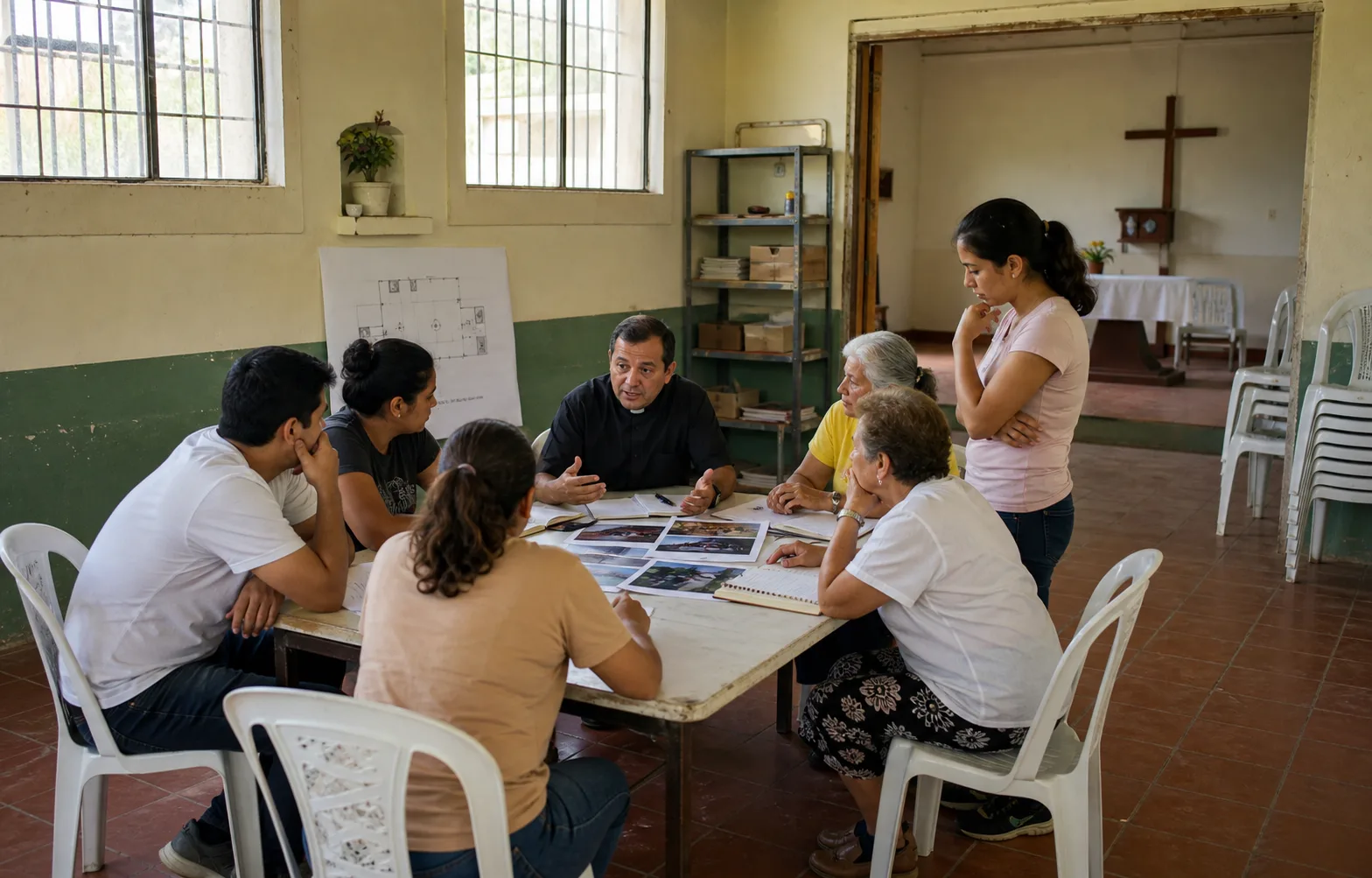
A technical visit should leave a clear route: what to address first, what can wait, what requires design, and how to move forward without disrupting community life.

Understand use, community, urgency, and available resources.
Read physical condition, moisture, roof, light, sound, access, and risks.
Separate what is urgent, viable, and what requires design or budget.
Define scope, priorities, images, drawings, or pricing according to the case.
Coordinate decisions, purchasing, and phased construction when the project moves forward.
FIRST CONTACT
Share the condition of the place, the urgency, and the type of community. We review the information and reply with the next step: technical visit, assessment, maintenance, drawings, or phased construction.